
Releases
Is Inkling 2 small any good?
Former OpenAI cofounder Mira Murati’s startup Thinking Machines has had a relatively quiet existence, releasing their managed LLM training platform Tinker and the rather lackluster Inkling 1 LLM, but they look to establish themselves as a serious frontier lab with the Inkling 2 Small release.
First off calling this model “small” is a bit of a misnomer, as it is almost 600 billion parameters, which will require over 300GB of GPU memory to deploy. Earlier on in the field’s history small meant models <10B parameters, large was >100B, with medium in between. Now nobody (other than Qwen and Liquid AI) make models less than 100B, and anything less than 1 trillion parameters is “small”, but I digress.
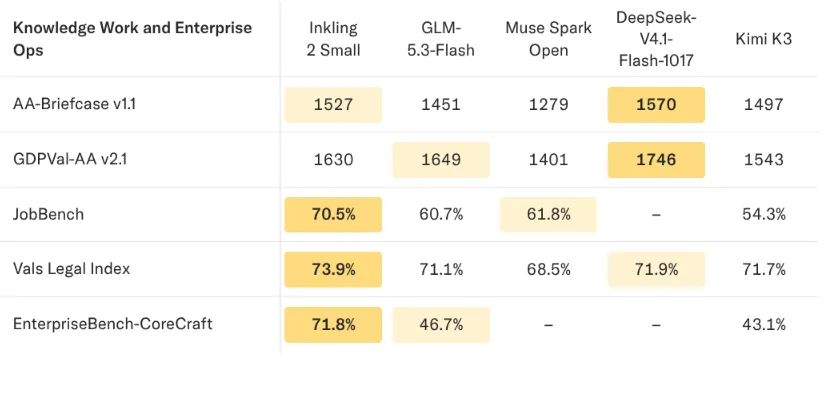
Inkling 2 Small is meant to fit in the fast, cheap, and good category alongside DeepSeek V4.1 Flash 1017, GLM 5.3 Flash, GPT 6 Luna, and Haiku 5.5.
It is definitely a bit behind Haiku and DeepSeek in terms of coding, but is still able to hold its own and is not that far behind.
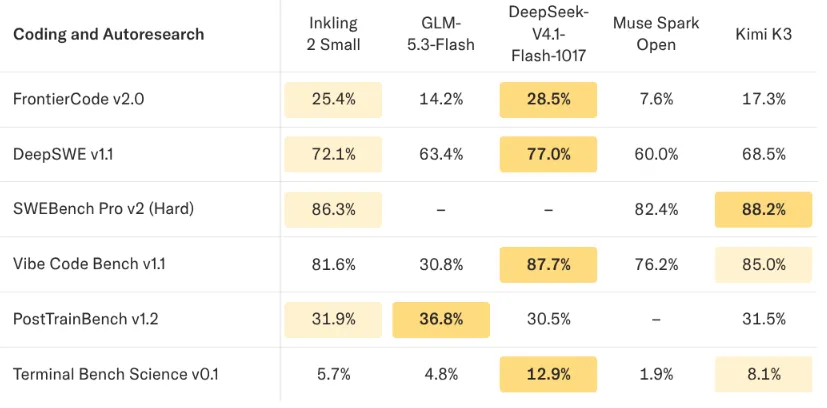
It stands out in most other categories however, being strong in finance and legal benchmarks, image understanding, and also design, being one of the top models in Design Arena.
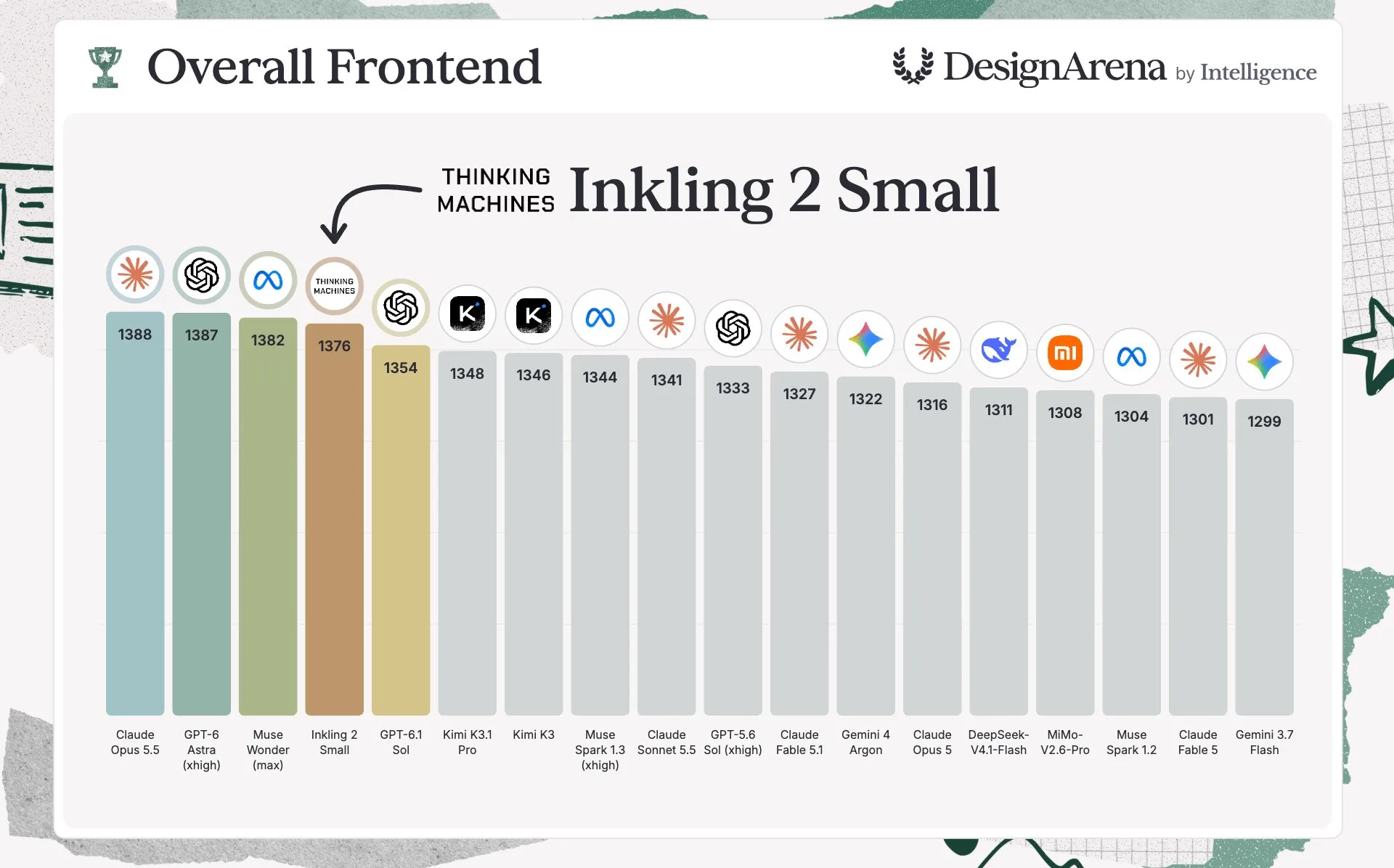
The model’s design capabilities come from the model’s tasteful training. Normally training on more tokens is considered better, however Thinking Machines have gone the other way, using one quarter the number of tokens during pretraining vs the original Inkling model (12 trillion vs 45 trillion). They also focused on the quality of their synthetic environments rather than just raw quantity, taking ideas from Frontier Code like measuring how the model approached the problem (not just whether its code passed). This training has also made it more conducive to finetuning, something that the original Inkling struggled with.
This points in an interesting direction where more data is not better, which flies in the face of traditional scaling pilled researchers.
Inkling 2 Small will be open sourced with an Apache 2 license some time next week. For the past year I have said that the title of “best American open source model” is a bit of a meaningless prize due to the poor quality of models that have been coming out from the US, but Thinking Machines seem to be turning that narrative around, arising as a serious competitor in the open source space.
I will definitely be sprinkling in some Inkling 2 usage during the coming weeks, as it seems to be the most tasteful small model we have right now, and I look forward to future (maybe larger?) releases from Thinking Machines.
Finish
I hope you enjoyed the news this week. If you want to get the news every week, be sure to join our mailing list below.