
News
Jensen Leaves Nvidia
AI’s most important figure has been forced out as CEO. Jensen Huang, CEO of Nvidia, whose hardware has enabled OpenAI, Anthropic, and all the other major players (including the Chinese ones).
This is due to Jensen being found to have extramarital relations with a “Chinese spy” named Alice Huang, who was an executive at MegaSpeed, a Singaporean company thought to be smuggling Nvidia GPUs to China, circumventing US sanctions. It was also revealed that he had 2 other relations with internal Nvidia employees, but it seems the main reason for the Nvidia board removing him is his alleged relations with a spy. Still, it has to have been a really tough week for his wife.

As the week has gone on however, there have been some cracks forming around the allegations, making it seem like a targeted takedown rather than an expose of the truth.
The first wrinkle is that the official CIA report (which they had been investigating for over a year) said they were “not yet convinced” that she was a spy at all.
According to the Washington Post, it was Marco Rubio (the United States Secretary of State and a China hawk) who took the CIA report and rewrote it “in his own more assertive terms”.
The Rubio document, which was classified, was then leaked to the New York Times, which caused the fallout that we have seen. There are currently rumors floating around that the leaker of this document was Jack Clark, Anthropic cofounder and one of the main people that has been lobbying for increased export controls on chips going to China. I have not been able to substantiate these claims, but I also don’t think Anthropic is upset about this to say the least.
With all of this, it seems that this is much more a takedown of Jensen by the detractors of China. Jensen has been very pro open source AI and wants to supply GPUs to China (even if the Chinese government doesn’t want their companies having them) and has lobbied to keep things as open as possible in Washington, which seems to have evoked the ire of many of those that are against China (Rubio and other China hawks) or those who do not like open source AI (Anthropic).
Jensen is a once in a lifetime CEO, and I don’t think anyone on earth (or any team for that matter) can take over his role. He has deep personal ties with all of the major players in the industry going back 30 years, has over 60 direct reports at Nvidia, and has been one of the major balancing factors making sure that all labs have access to compute, not just Anthropic and OpenAI.
Nvidia will be fine in the short term, but I think the field will look very different in the medium to long term without Jensen, most likely for the worse. There is an open petition to reinstate Jensen as CEO, which has been signed by the likes of Elon Musk, Tim Sweeney, and Garry Tan.
I personally think he will be reinstated (similar to Sam Altman a few years ago) and am worried what will happen if he is not.
Releases
Fable 5.2
Following up their very successful Opus 5.5 release, Anthropic has given us Fable 5.2 (a new model, but a smaller version number, very confusing).
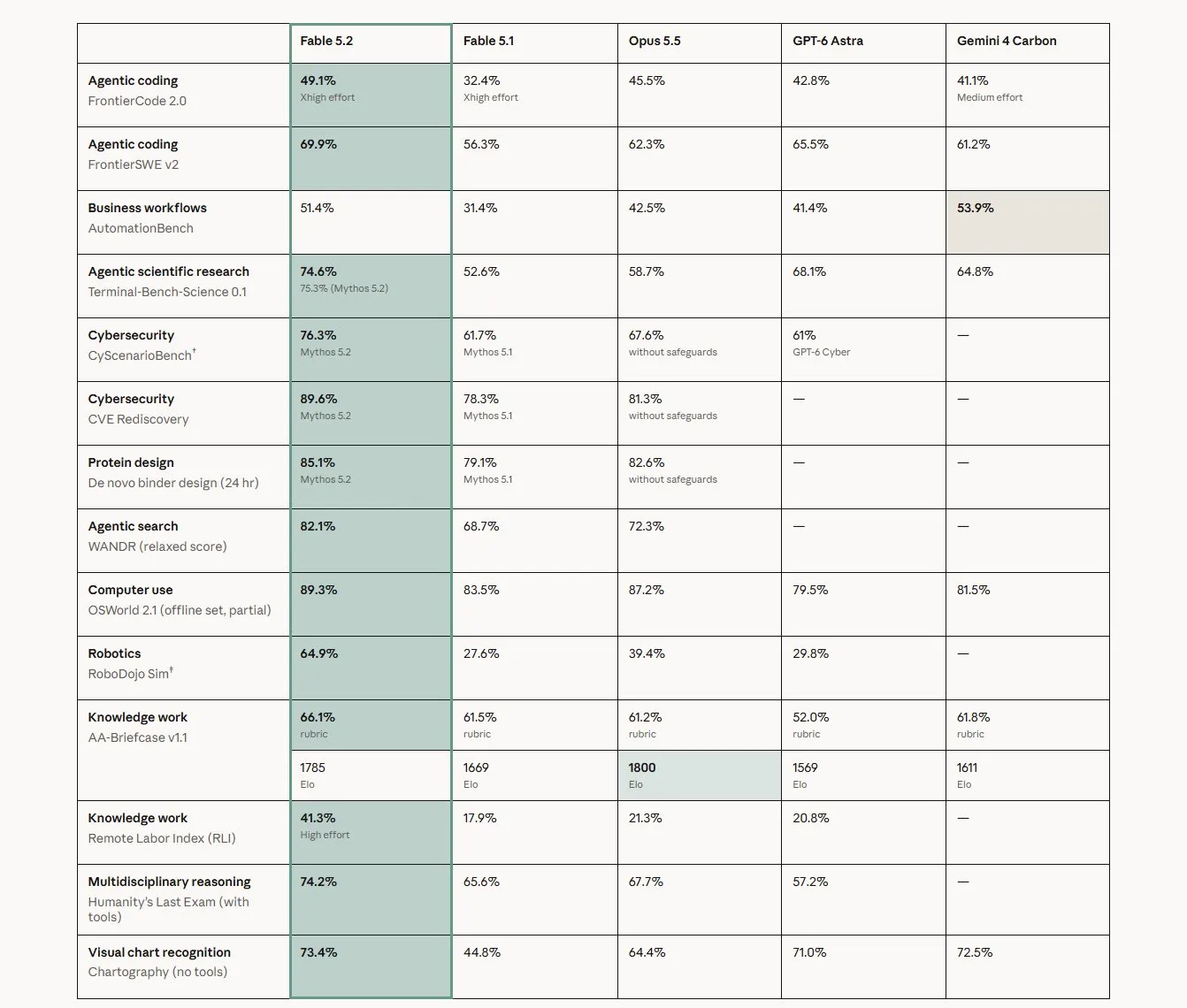
On the usual benchmarks the model seems better, but as I have mentioned before, it is getting very difficult to tell frontier models apart, as there are very few day to day tasks that they can’t already do.
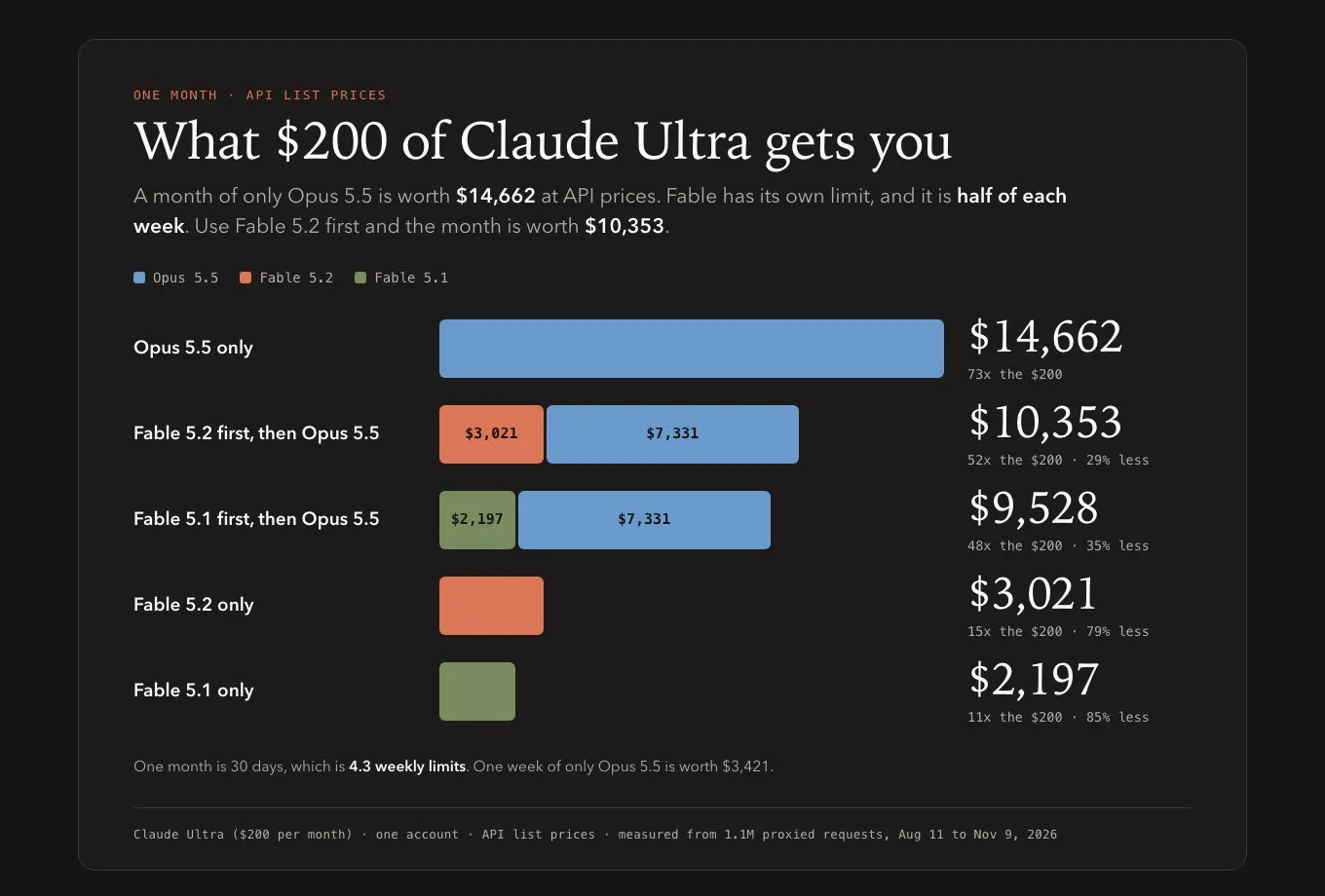
For coding, it seems to be effectively identical to Opus 5.5, in terms of quality and a bit higher in price, so I would not use it for that, especially on an Anthropic subscription plan as you get far less value when using Fable vs Opus.
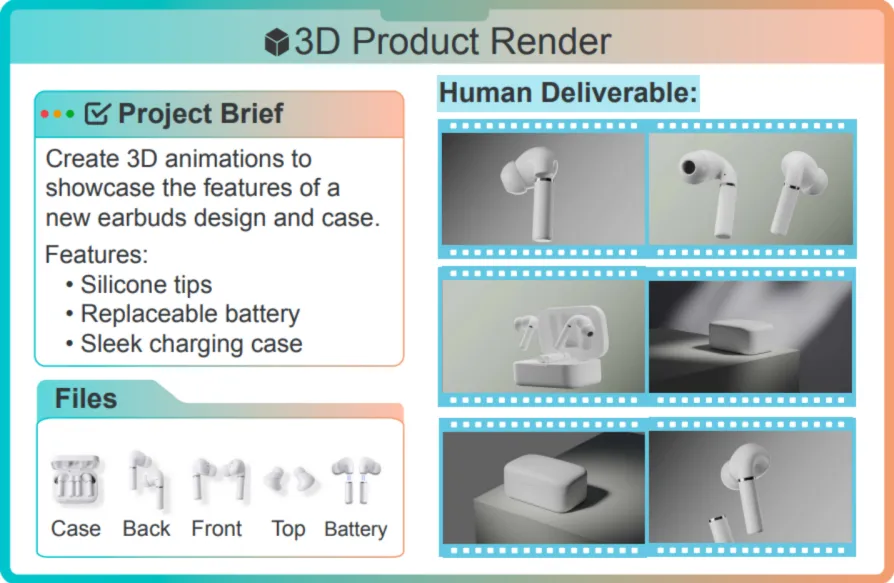
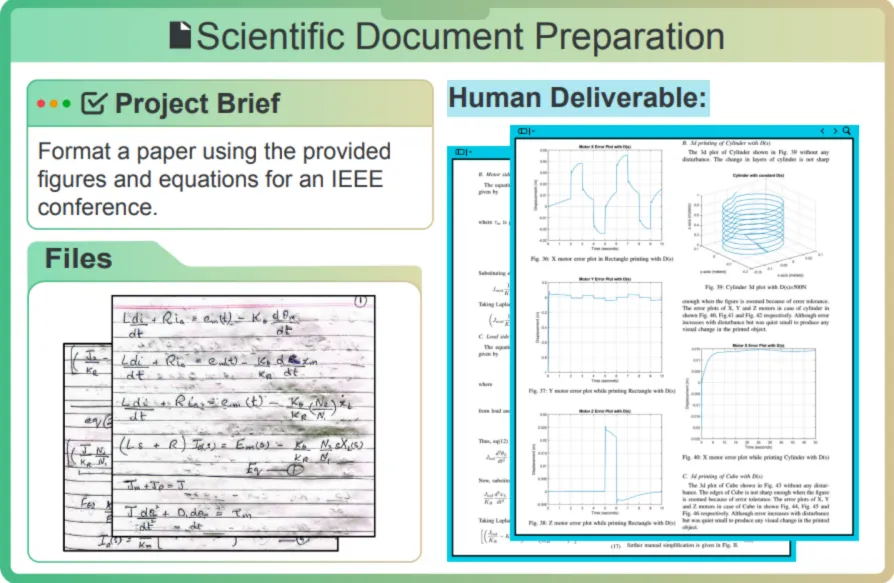
Where it does seem to shine is on tasks that require a computer but are not coding, as shown by the (previously unknown to me, but appears to be good) Remote Labor Index benchmark, where it ~doubles the score of the 2nd best model, Opus 5.5.
These tasks include video creation and editing, CAD, graphic design, game dev, audio and music design, building and landscape architecture, and product design.
One interesting thing to note is that Anthropic specifically mentioned in the Fable 5.2 system card that the model has been intentionally nerfed to “limit advances in the specific research capabilities that could most directly accelerate AI development”, later stating that capabilities for things like Cuda kernel optimization and architecture research would be limited to Opus 5.5 levels.
It is a very good model, but outside of the tasks listed above, I don’t think you will see much of a meaningful difference versus Opus 5.5, outside of the increased price.
Quick Hits
Muse Ember
Meta’s previous models have been pretty meh, but Ember seem to be good for its size.
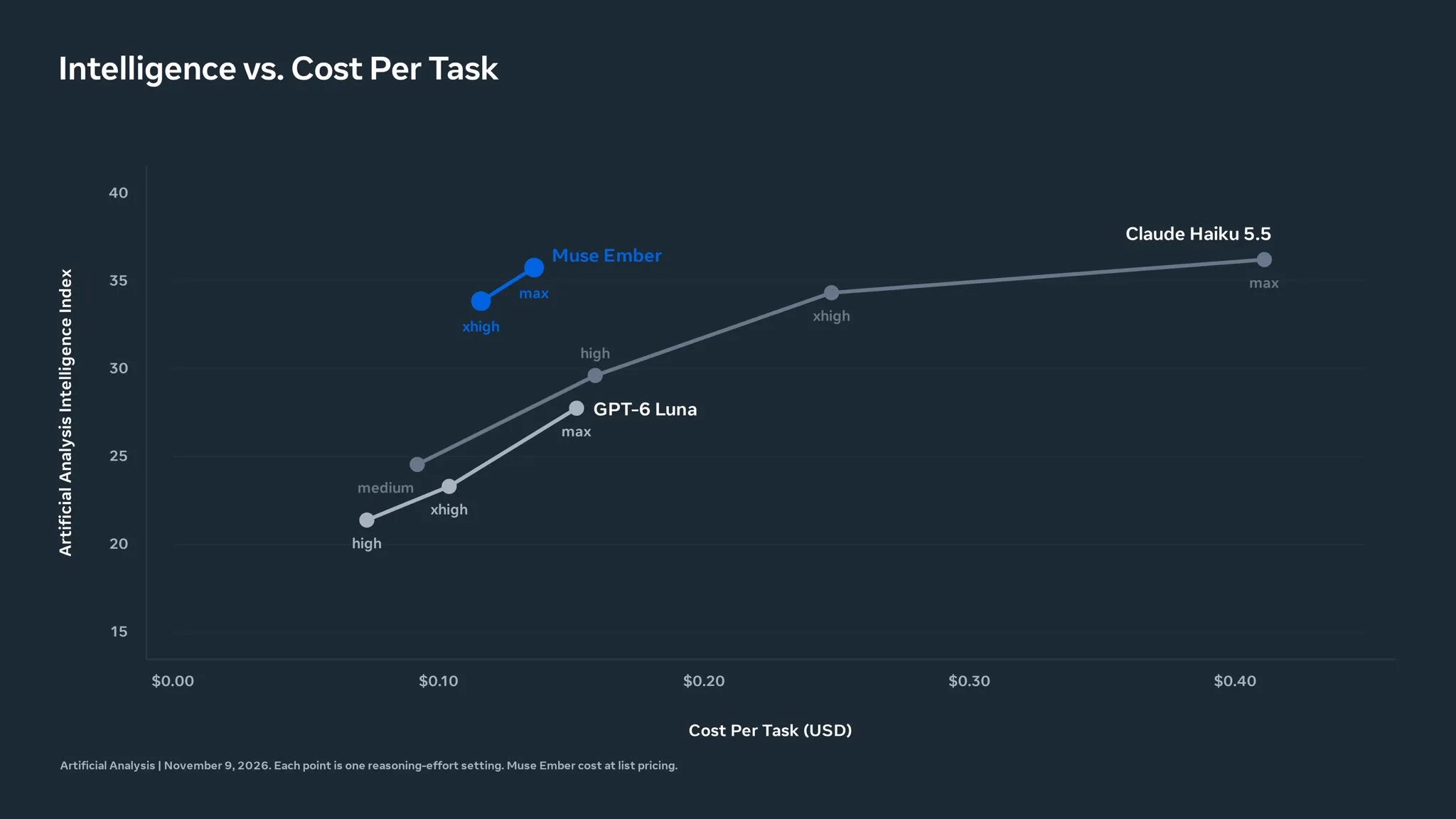
It aims to be a small workhorse model, similar to Haiku 5.5 and DeepSeek V4.1 Flash 1017 and seem to accomplish this well, being around Haiku 5.5 intelligence, noticeably cheaper, with speeds near 400 tokens per second.
I have not been able to try the model myself yet, but the boots on the ground seem to saying good things about it, so for your more basic tasks I would give it a try.
Gemini 4 Carbon
Gemini 4 Carbon, a model that was announced over 2 weeks ago, has finally been released (although only to people on the $200/month Gemini plan or API users).
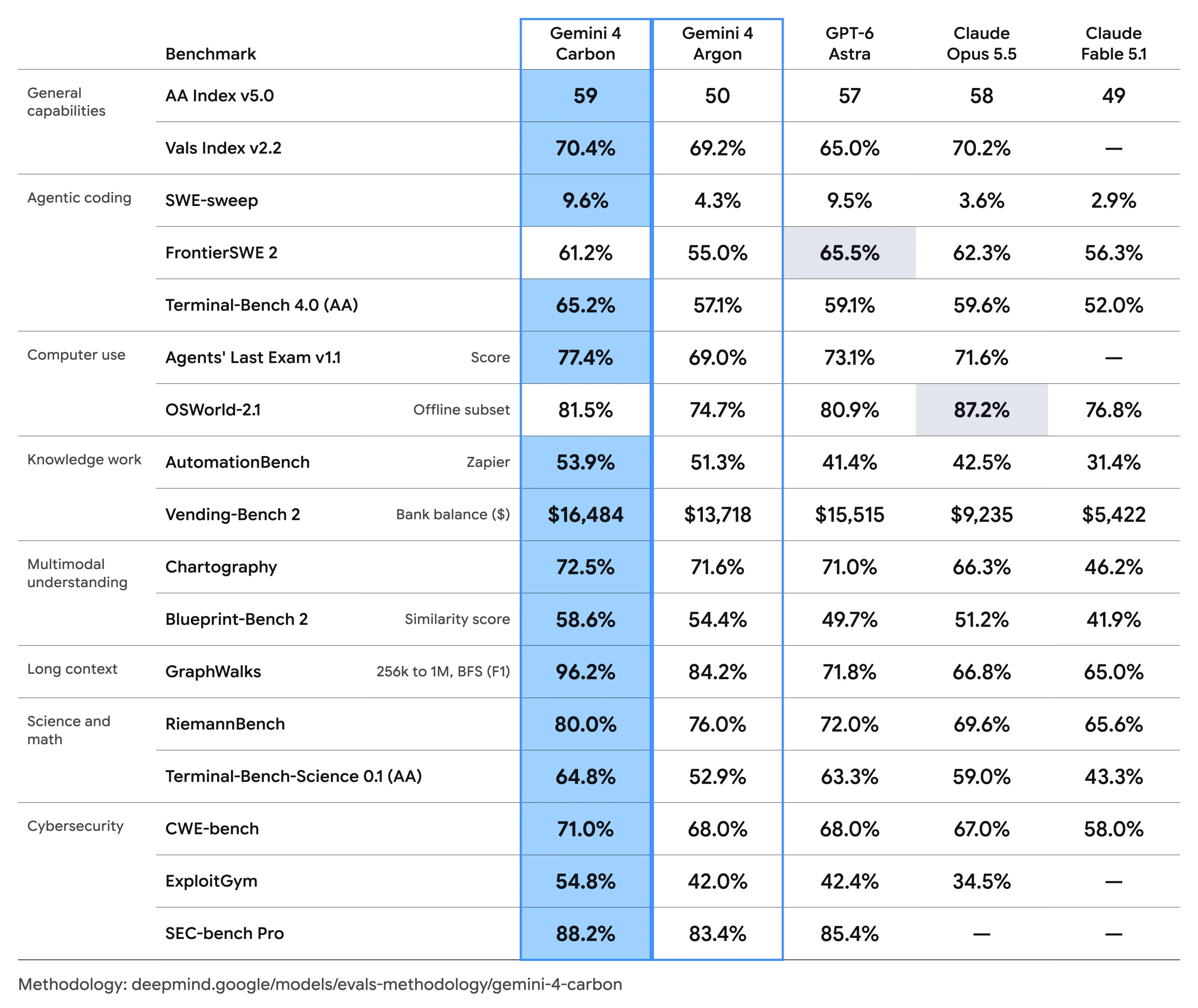
The model has flashes of brilliance, as shown by its impressive benchmark scores (although it is still benchmaxxed quite a bit) but at the end of the day it is still a Gemini model which means it has some big issues.
The most notable is the fact that it hallucinates a bunch. Anthropic and OpenAI have both seemingly figured out hallucinations, where they are effectively a non issue when using their models, but the Gemini models, Carbon included, still hallucinate like its 2023.
Actually using the model is bad as well. I have seen many report of slow speeds, coupled with long reasoning chains, which make it feel very slow compared to OpenAI and Anthropic models.
It also is much more poorly subsidized on the subscription plans when compared to Opus or Sol, so you will get less bang for your buck when using this model.
Google seems to be making some progress (the model doesn’t seem to thrash in its harness, or have complete mental breakdowns saying that it needs to be turned off when it can’t complete a task), but it is still fairly unusable in the real world.
UPDATE: It still has mental breakdowns.
Finish
I hope you enjoyed the news this week. If you want to get the news every week, be sure to join our mailing list below.